Why Split-Levels and Walk-Outs Are Different in Fayetteville
Split-level and walk-out homes are common across Fayetteville, especially in neighborhoods built during the mid-20th century. These designs are practical and livable, but they also create specific moisture risks that a standard ranch or two-story home does not face. A split-level home often has one level partially below grade, which means the foundation wall on that side is doing double duty: holding back soil and managing groundwater. A walk-out basement, meanwhile, has one wall fully exposed to the outdoors and three walls buried, so water pressure and drainage behave very differently from corner to corner.
In Fayetteville, the climate adds another layer of complexity. Heavy summer thunderstorms and periods of sustained rain can saturate the soil quickly. When that happens, water finds the path of least resistance, and in split-levels and walk-outs, that path often leads straight into the lower level. Homeowners in older neighborhoods like Haymount, where historic homes often have mature landscaping and aging foundation systems, may notice dampness, musty odors, or efflorescence (the white chalky residue on masonry) long before they see standing water. Understanding these patterns is the first step toward keeping your lower level dry.
Common Signs of a Split-Level Basement Leak
A split-level basement leak does not always announce itself with a puddle. More often, it starts small: a dark stain spreading across a concrete block wall, a section of carpet that feels slightly damp near the baseboard, or a persistent musty smell that never quite goes away. In walk-out basements, the exposed wall is particularly vulnerable to wind-driven rain, while the buried walls can develop Basement Waterproofing issues related to hydrostatic pressure. If you notice Foundation Waterproofing concerns like horizontal cracks, bowing, or gaps at the cove joint where the wall meets the floor, those are signs that water pressure is already affecting the structure.
Lower level moisture can also show up in less obvious ways. Wood trim may swell or separate, drywall may feel soft near the bottom, and metal fixtures may rust. In Haymount historic homes, original stone or brick foundations can absorb water like a sponge, leading to chronic dampness that damages plaster and wood framing over time. If you are seeing any of these signs, it is worth documenting them with photos and noting when they appear (after rain, during humid weeks, or year-round). That information will help a professional diagnose the source quickly and recommend the right solution, whether that is an Interior Drain Tile System or an exterior approach.
Walk-Out Basement Waterproofing: Unique Challenges and Solutions
Walk-out basement waterproofing requires a tailored strategy because the home sits on a slope with one side open to the yard. The exposed wall faces direct rain, snowmelt, and runoff, while the three buried walls contend with soil moisture and hydrostatic pressure. A common failure point is the transition zone where the exposed wall meets the buried walls; water often seeps in at that corner because drainage is uneven. Another issue is surface water management: if the grading around the exposed side slopes toward the house, or if gutters discharge too close to the foundation, water will pool against the wall and eventually find a way inside.
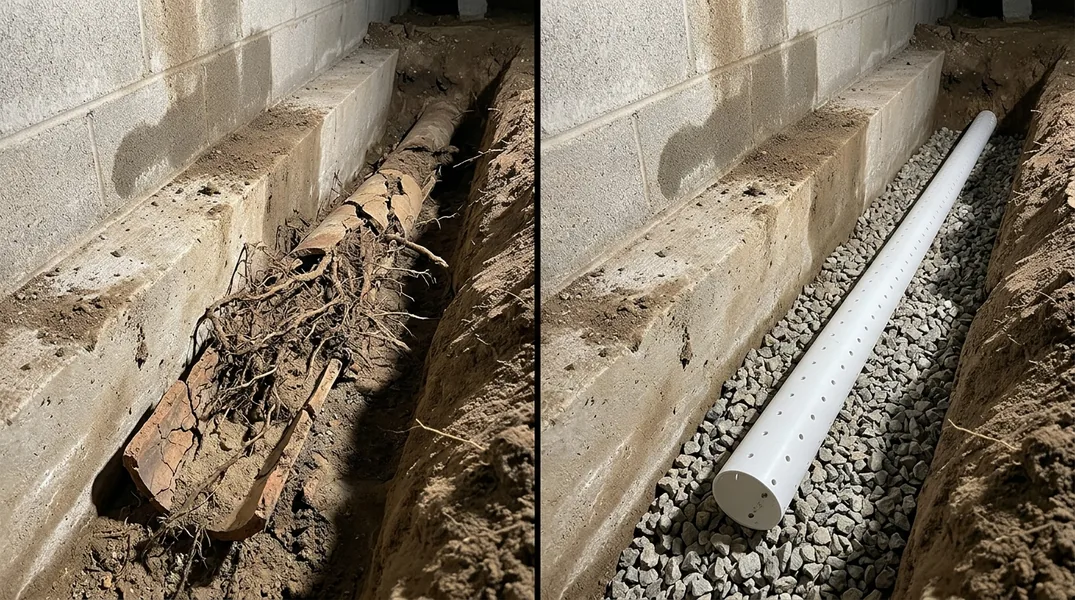
The solution usually combines several tactics. Exterior Basement Waterproofing can involve regrading the soil, extending downspouts, and installing a drainage membrane or exterior footing drain to redirect water away from the foundation. On the interior, a drain tile system and a sump pump can handle any water that makes it through the walls or floor. For homes in Hope Mills and Spring Lake, where lots may be flatter or drainage patterns vary, the same principles apply: control surface water first, then manage subsurface moisture. A professional assessment is the best way to determine which combination fits your home and budget.
Basement Wall Cracks: What They Mean and When to Worry
Not all basement wall cracks are emergencies, but they all deserve attention. Hairline vertical cracks in poured concrete are often caused by shrinkage as the concrete cures and may not leak immediately. However, once water finds its way through, they can become active entry points. Horizontal cracks are more concerning because they often indicate soil pressure pushing against the wall, which can lead to bowing or structural movement. In block foundations, stair-step cracks along mortar joints are a classic sign of settling or water pressure. In Haymount historic homes, cracks in stone or brick foundations may be part of the home's age, but they still need to be monitored and sealed to prevent moisture intrusion.
If you see a crack, do not simply patch the surface. The key is to address the water source first. Sealing a crack from the inside without managing exterior water pressure is like putting a bandage on a leaking pipe. A proper repair might involve injecting epoxy or polyurethane into the crack, but it should be paired with a broader waterproofing plan. For homeowners in Eastover and throughout the region, a professional inspection can determine whether cracks are cosmetic, active leaks, or signs of a larger structural issue. Early intervention is almost always less expensive than waiting for a small crack to become a big problem.
Basement Waterproofing Near Me: When to Call a Pro in Fayetteville
If you have tried the basics, like cleaning gutters, extending downspouts, and regrading the soil, but your lower level still feels damp or shows signs of water, it is time to call a professional. Persistent musty odors, visible mold, recurring damp spots, or any crack that leaks during rain are clear signals that a DIY fix will not be enough. In split-levels and walk-outs, the interaction between grade, drainage, and foundation design is complex, and the wrong fix can waste money and leave the problem unresolved. A professional can identify whether you need interior drainage, exterior waterproofing, or a combination of both.
Fayetteville Waterproofing serves homeowners across Fayetteville and the surrounding communities. If you are searching for "basement waterproofing near me," look for a company that understands local soil conditions, historic home construction, and the specific challenges of split-level and walk-out designs. A thorough inspection should include a look at both the interior and exterior, a review of drainage patterns, and a clear explanation of options. You can free estimate or call (472) 202-6252 to schedule a visit. Getting ahead of moisture issues protects your home's value and your peace of mind.
Basement Waterproofing Cost in Fayetteville: What to Budget
The cost of basement waterproofing varies widely depending on the method, the size of the area, and the severity of the problem. A simple crack injection might be a few hundred dollars, while a full interior drain tile system with a sump pump can run several thousand. Exterior waterproofing, which involves excavation and drainage work, is typically the most involved and therefore the most expensive option. For split-levels and walk-outs, costs can be affected by accessibility and the need to address multiple wall types. It is important to get a detailed, written estimate that explains what is included, so you can compare apples to apples.
While it is tempting to choose the lowest bid, consider the long-term value. A properly waterproofed lower level protects your home from mold, structural damage, and lost usable space. Many homeowners find that the investment pays for itself by preventing costly repairs down the road. If you are budgeting for a project, ask about financing options and schedule a consultation to get a clear picture of pricing for your specific situation. Fayetteville Waterproofing can walk you through the options and help you prioritize the work that will make the biggest difference for your home.
Looking for a professional basement waterproofing contractor in Fayetteville? Fayetteville Waterproofing responds fast for all your basement waterproofing needs.
Get a Free QuoteOur services: Basement Waterproofing · Interior Drain Tile System · Exterior Basement Waterproofing